Archives
- 2026-11
- 2026-10
- 2026-09
- 2026-08
- 2026-07
- 2026-06
- 2026-05
- 2026-04
- 2026-03
- 2026-02
- 2026-01
- 2025-12
- 2025-11
- 2025-10
- 2025-09
- 2025-03
- 2025-02
- 2025-01
- 2024-12
- 2024-11
- 2024-10
- 2024-09
- 2024-08
- 2024-07
- 2024-06
- 2024-05
- 2024-04
- 2024-03
- 2024-02
- 2024-01
- 2023-12
- 2023-11
- 2023-10
- 2023-09
- 2023-08
- 2023-07
- 2023-06
- 2023-05
- 2023-04
- 2023-03
- 2023-02
- 2023-01
- 2022-12
- 2022-11
- 2022-10
- 2022-09
- 2022-08
- 2022-07
- 2022-06
- 2022-05
- 2022-04
- 2022-03
- 2022-02
- 2022-01
br Conflict of interest br Acknowledgements br
2022-02-01
Conflict of interest Acknowledgements A Class of Unconventional, Dimerization-Activated GTPases GTP-binding proteins, or GTPases, are a superfamily of proteins that regulate numerous cellular pathways 1, 2, 3, 4. Pioneering work on the extended Ras subfamily of GTPases, exemplified by Ras,
Curcumin is the active ingredient extracted from the natural
2022-02-01
Curcumin is the active ingredient extracted from the natural medicine turmeric rhizome (Goel et al., 2008, Aggarwal and Harikumar, 2009). Studies have shown that curcumin has anti-tumor, anti-inflammatory, antioxidant and antimicrobial properties (Larsen et al., 2007, López-Lázaro, 2008). Although c
br Material and methods br
2022-02-01
Material and methods Result Discussion The female with well-differentiated endometrial cancer, especially those in the reproductive age have a strong desire to preserve fertility. Therefore, conservative medical treatment with progestin is widely used in the clinic. However, up to 30% of pa
Interestingly mGlu and mGlu receptors differ notably by thei
2022-02-01
Interestingly, mGlu2 and mGlu3 receptors differ notably by their cellular distribution. Whereas mGlu2 receptors are mostly neuronal, mGlu3 receptors are expressed both in glia and in neurons. In neurons, mGlu3 receptors are present at the post-synapse and in presynaptic elements (Tamaru et al., 200
br Results and discussion br Conclusions TZDs represent a we
2022-02-01
Results and discussion Conclusions TZDs represent a well-studied group of antidiabetic agents. Based on previous observations of the ability of some TZDs to activate FFAR1, we designed five scaffolds consisting of the TZD head, a linker, and a carefully selected privileged structure. For the p
A key limiting factor in
2022-01-31
A key limiting factor in the semi-quantitative analysis of changes in the nuclear-to-cytoplasmic distribution of glucokinase is the large intercellular heterogeneity of N1-Methyl-ATP receptor of glucokinase in both isolated hepatocytes in vitro and also in liver in vivo[13], [23], [24], [26], [36].
The findings in this study may represent an
2022-01-31
The findings in this study may represent an example of a more general phenomenon, namely that the exquisite specificity of the G protein-coupled receptors that mediate the physiological actions of the naloxone hcl family hormones in mammals may have arisen relatively late in evolution. In non-mamma
br Acknowledgements This work was supported by a
2022-01-31
Acknowledgements This work was supported by a fellowship to C.H. under the ‘100 Foreign Expert’ scheme of the Shanxi province government(R100456). Conflict of interest: Dr. Holscher is a named inventor on a patent submitted by Lancaster University on the use of dual GLP-1/GIP analogues in neurode
Our own search towards aryl imidazole derived
2022-01-31
Our own search towards aryl-imidazole derived GSMs led to the discovery of the benzimidazole derivative (). It is one of the most potent GSMs to date, suffering however from sub-optimal drug-like properties. More recently, we have described the design and synthesis of bicyclic triazolo-derivatives,
It has also been demonstrated that PS
2022-01-31
It has also been demonstrated that PS1 is ubiquitinated by Caenorhabditis elegans SEL-10 [52], Fbw7 the mammalian homologue of SEL-10 [38], and more recently by tumour necrosis factor handbag associated factor 6 (TRAF6), which facilitates Lysine-63 (K63)-linked polyubiquitination of PS1 [50], [51].
Encouraged by the observation obtained from region A we sele
2022-01-31
Encouraged by the observation obtained from region A, we selected the structure of 1 as the next template to successively pursue the SAR on regions B-D of 1 (lower side of Fig. 2). Next, we turned attention to the external aromatic ring of 1 to verify the impact on the antagonistic activity and prep
Reports described a range of synthetic GPR agonists with des
2022-01-31
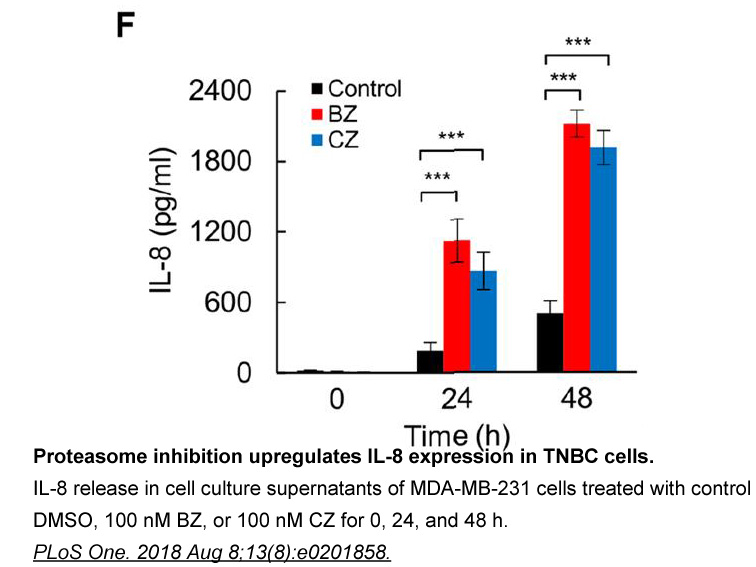
Reports described a range of synthetic GPR40 agonists with desirable safety and efficacy profiles, compared with existing antidiabetic therapies such as insulin and sulfonylureas [[20], [21], [22], [23], [24], [25], [26], [27], [28]]. Among them, several small molecules were tested in the clinical t
br FREE FATTY ACID RECEPTOR GPR br G PROTEIN COUPLED
2022-01-31
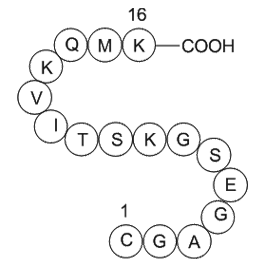
FREE FATTY ACID RECEPTOR 1 (GPR40) G-PROTEIN-COUPLED RECEPTOR 120 CONCLUSION Free fatty Asunaprevir receptors whose natural ligands are identified as FFAs having various lengths have been reported. They act as novel nutrient sensing receptors independent of PPARs and FABPs, and they are kn
ADAM has two alternative splicing forms
2022-01-31
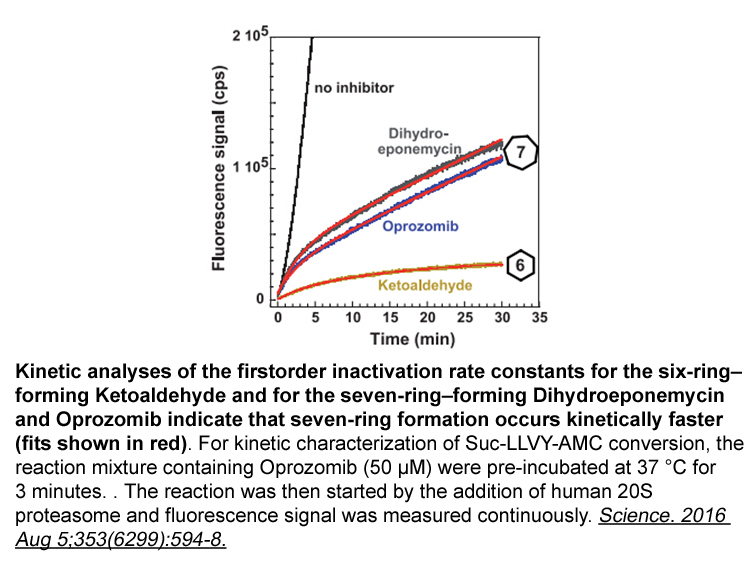
ADAM12 has two alternative splicing forms, a membrane-anchored long form (ADAM12-L) and a secreted short form (ADAM12-S). Both the long and short forms have metalloproteinase, disintegrin, cysteine-rich, and epidermal growth factor-like domains and can shed pro-heparin binding-epidermal growth facto
It was then found that TAZ a
2022-01-31
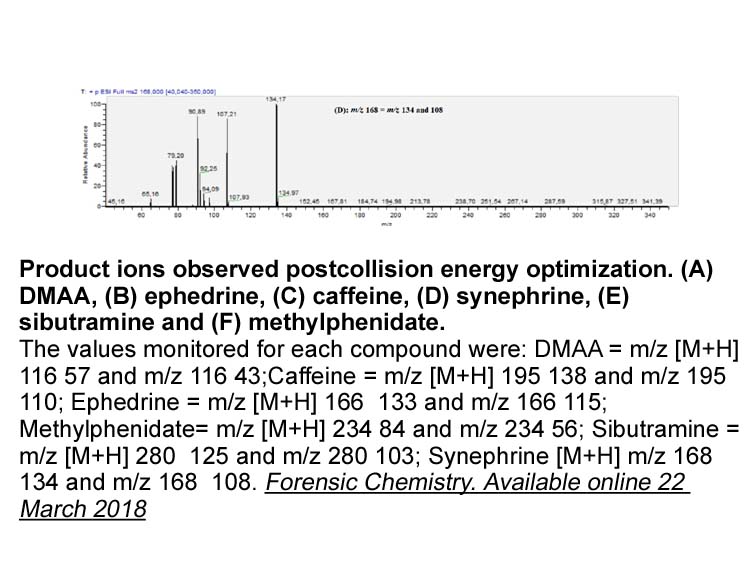
It was then found that TAZ, a YAP holomog, binds heteromeric SMAD2/3–4 complexes in a TGF-ß-dependent fashion, and is recruited to TGFβ response elements (Varelas et al., 2008). Knockdown experiments identified TAZ as critical for nuclear accumulation of SMAD2/3/4 complexes in response to TGF-ß, and
8779 records 566/586 page Previous Next First page 上5页 566567568569570 下5页 Last page